Leaders in mechanised habitat translocation, restoration and creation
Leaders in mechanised habitat translocation, restoration and creation
A Dorset Family Business With Over Thirty Years of Ecological Contracting Expertise
A Dorset Family Business With Over Thirty Years of Ecological Contracting Expertise
AlaskA Ecological is a family run business. A specialist ecological contracting company established in the late 1980’s in response to a growing demand for environmental protection, mitigation for developments and for large scale nature reserve management.
Originating from a farming and forestry contracting firm Will Bond diversified and developed the company into a specialist ecological contracting company that can help find solutions to achieve ecological objectives in the most challenging of environments. Will’s son Nat Bond has played an active role in AlaskA over the last 10 years and along with the rest of the team will continue to take the company from strength to strength.
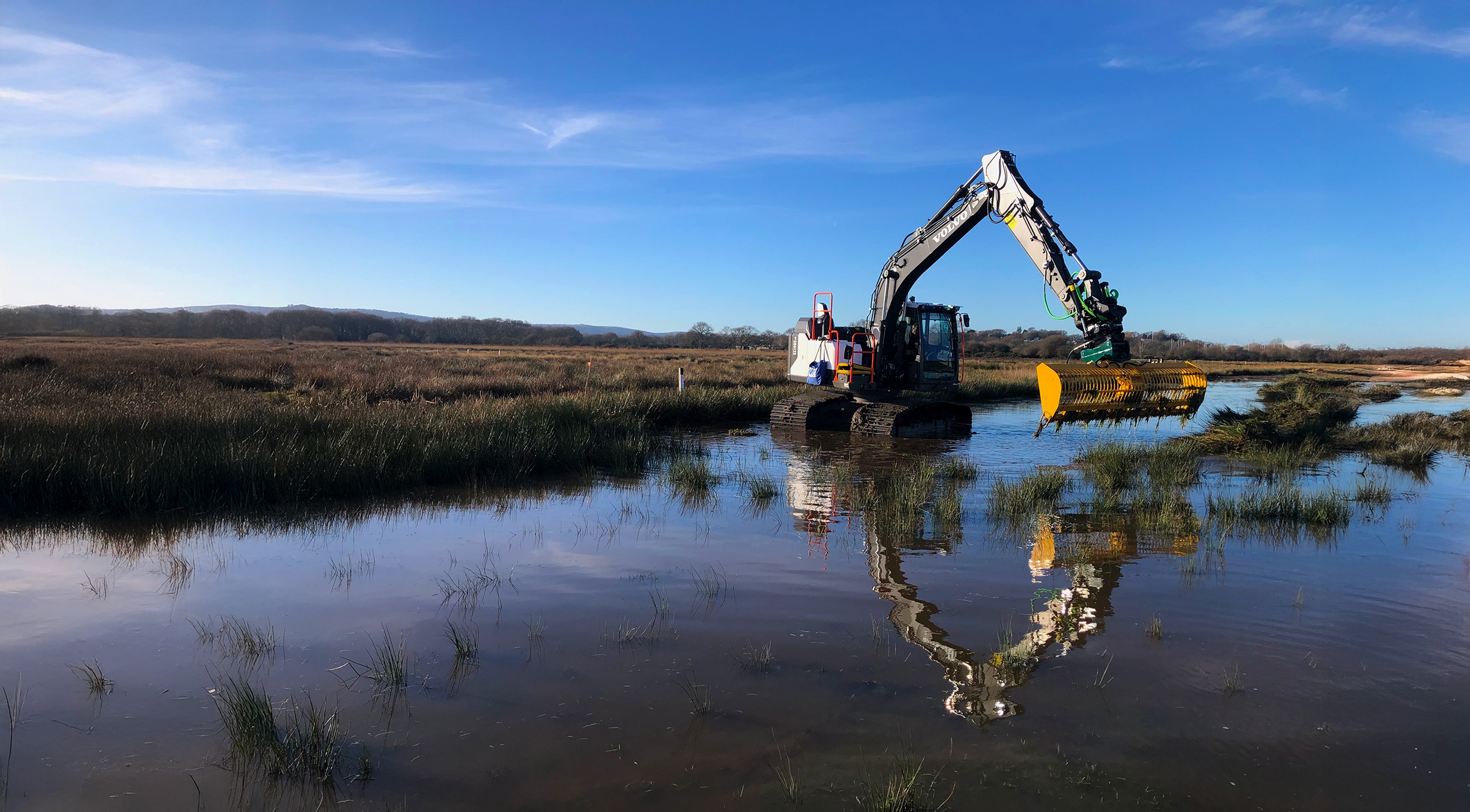
Alaska Ecological Contracting carries out landscape-scale habitat creation, restoration, and translocation across the United Kingdom. Using the latest machinery, including low ground pressure tracked excavators with tilt rotators for buckets and attachments, we undertake works for the benefit of landscape and wildlife on ecologically sensitive sites.
Our nature reserve management works include river restoration, watercourse and wetland creation and restoration, pond creation and restoration, ditch creation and maintenance, reedbed lowering, scrub clearance, stump grinding and splitting, seed harvesting, heather brash harvesting and spreading, and rewilding schemes. For development projects, we provide ecological mitigation habitat creation and translocation of grassland, heathland woodland, and ponds.
Clients Include
Natural England, Forestry England, Environment Agency, RSPB, The National Trust, Wildlife Trusts, Council Authorities, National Parks Authorities, Amphibian and Reptile Conservation (ARC), Wessex Water, ecological consultants, construction companies, quarry operators, housing developers, country estates and private clients.
Equipped to Deliver with low ground pressure excavators to amphibious machinery - specialist kit for the UK's most demanding sites
Alaska Ecological Contracting carries out landscape-scale habitat creation, restoration, and translocation across the United Kingdom. Using the latest machinery, including low ground pressure tracked excavators with tilt rotators for buckets and attachments, we undertake works for the benefit of landscape and wildlife on ecologically sensitive sites.
Our nature reserve management works include river restoration, watercourse and wetland creation and restoration, pond creation and restoration, ditch creation and maintenance, reedbed lowering, scrub clearance, stump grinding and splitting, seed harvesting, heather brash harvesting and spreading, and rewilding schemes. For development projects, we provide ecological mitigation habitat creation and translocation of grassland, heathland woodland, and ponds.
Clients Include
Natural England, Forestry England, Environment Agency, RSPB, The National Trust, Wildlife Trusts, Council Authorities, National Parks Authorities, Amphibian and Reptile Conservation (ARC), Wessex Water, ecological consultants, construction companies, quarry operators, housing developers, country estates and private clients.
Habitat Translocation
AlaskA supports insitu conservation whenever possible. In some cases a planning condition for a development may involve habitat translocation, and is a last resort solution to retaining the habitat by relocating it.
Translocation can also play a positive role for pipeline works or archeological digs where the turves can be temporarily stored to the side of the trench and then reinstated.
Turf Translocation can also be utilised for repositioning macro turves within a site for use in erosion control such as along river and stream banks or translocated within a site to retain the habitat in the correct hydrological conditions (Arne Moors translocating unimproved grassland behind a new sea wall) and to create a bare ground heathland mosaic in a win win situation such as creating a new heathland corridor (M25 Heathland Greenbridge).
Nature Reserve Enhancement
AlaskA’s other core activity is the enhancement of existing nature reserves to assist the Reserve Managers in their objectives and long term plans.
Our assistance as a specialist contractor is most evident when we are using our expertise and our specialist machinery to carry out the works required.
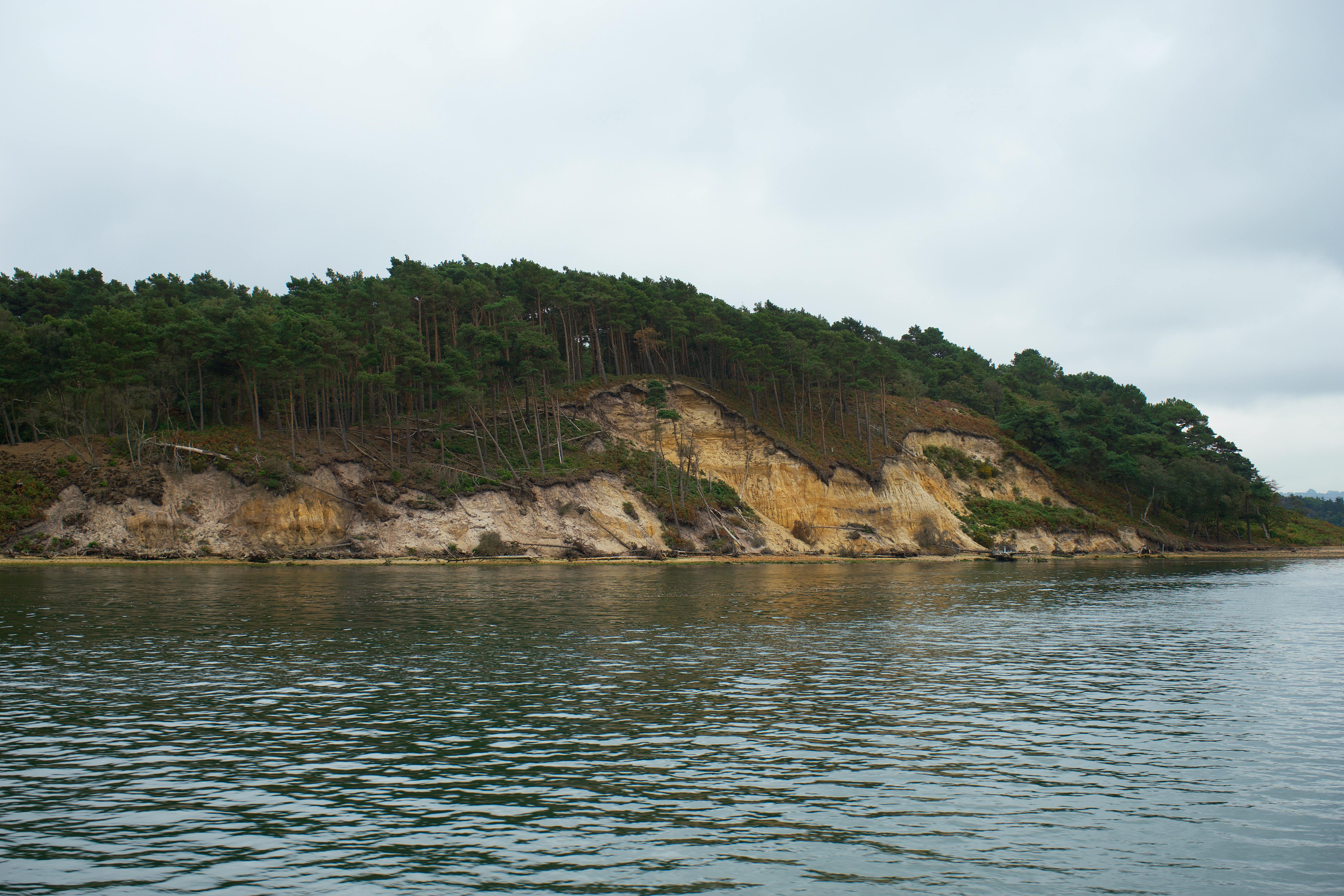
We are often involved in schemes funded through DEFRA for large landscape scale works, capital works and ongoing maintenance. Examples include shoreline and heathland restoration on Brownsea Island for National Trust, reedbed enhancement at RSPB Marazion Marshes, and hydrological restoration at Wild Woodbury rewilding site for Dorset Wildlife Trust.
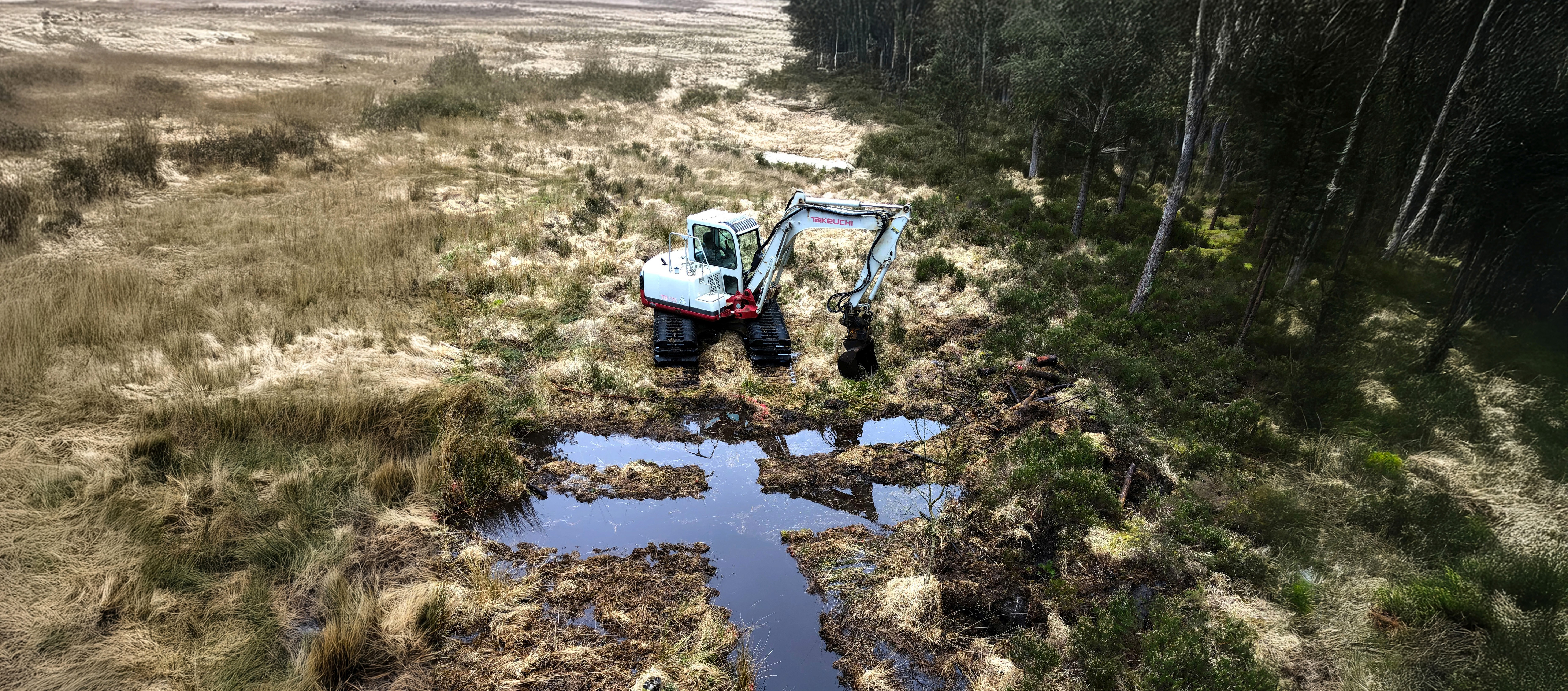
These works can involve scrub and tree clearance, stump grinding, reed cutting, heathland mowing, ditching, digging scrapes and ponds, drainage reversion, river restoration and vegetation management.
AlaskA Culture of Care - Working on Ecologically Sensitive Sites
The AlaskA teams attitude is to work as sensitively as possible on large scale works. AlaskA managers and machinery operators carry out the work to achieve the objectives in a sensitive way as the work is being carried out in order to produce the desired end result.
To assist this culture of care we use low impact machinery and well thought out methods of work to successfully enhance the existing habitat or landscape.
Machinery uses biodegradable hydraulic oil and HVO (Hydrogenated Vegetable Oil) fuel along with Adblue to reduce emissions.
Alaska excavator and dump truck operators have CPCS or CSCS NPORS certificates of competency and NPTC and /or Lantra certification for operation of tractors and chainsaws.
Alaska supervisors have SSSTS and/or SMSTS and IOSH Managing Safely in addition to CIRIA Environmental Good Practice on site.
Nature Reserve Enhancement
AlaskA’s other core activity is the enhancement of existing nature reserves to assist the Reserve Managers in their objectives and long term plans.
Our assistance as a specialist contractor is most evident when we are using our expertise and our specialist machinery to carry out the works required.
We are often involved in schemes funded through DEFRA for large landscape scale works, capital works and ongoing maintenance. Examples include shoreline and heathland restoration on Brownsea Island for National Trust, reedbed enhancement at RSPB Marazion Marshes, and hydrological restoration at Wild Woodbury rewilding site for Dorset Wildlife Trust.
These works can involve scrub and tree clearance, stump grinding, reed cutting, heathland mowing, ditching, digging scrapes and ponds, drainage reversion, river restoration and vegetation management.
AlaskA Culture of Care - Working on Ecologically Sensitive Sites
The AlaskA teams attitude is to work as sensitively as possible on large scale works. AlaskA managers and machinery operators carry out the work to achieve the objectives in a sensitive way as the work is being carried out in order to produce the desired end result.
To assist this culture of care we use low impact machinery and well thought out methods of work to successfully enhance the existing habitat or landscape.
Machinery uses biodegradable hydraulic oil and HVO (Hydrogenated Vegetable Oil) fuel along with Adblue to reduce emissions.
Alaska excavator and dump truck operators have CPCS or CSCS NPORS certificates of competency and NPTC and /or Lantra certification for operation of tractors and chainsaws.
Alaska supervisors have SSSTS and/or SMSTS and IOSH Managing Safely in addition to CIRIA Environmental Good Practice on site.



Copyright © 2026 Alaska Ecological Contracting Ltd All Rights Reserved
Copyright © 2026 Alaska Ecological Contracting Ltd All Rights Reserved
Copyright © 2026 Alaska Ecological Contracting Ltd
All Rights Reserved
Habitat Translocation
AlaskA supports insitu conservation whenever possible. In some cases a planning condition for a development may involve habitat translocation, and is a last resort solution to retaining the habitat by relocating it.
Translocation can also play a positive role for pipeline works or archeological digs where the turves can be temporarily stored to the side of the trench and then reinstated.
Turf Translocation can also be utilised for repositioning macro turves within a site for use in erosion control such as along river and stream banks or translocated within a site to retain the habitat in the correct hydrological conditions (Arne Moors translocating unimproved grassland behind a new sea wall) and to create a bare ground heathland mosaic in a win win situation such as creating a new heathland corridor (M25 Heathland Greenbridge).
Habitat Translocation
AlaskA supports insitu conservation whenever possible. In some cases a planning condition for a development may involve habitat translocation, and is a last resort solution to retaining the habitat by relocating it.
Translocation can also play a positive role for pipeline works or archeological digs where the turves can be temporarily stored to the side of the trench and then reinstated.
Turf Translocation can also be utilised for repositioning macro turves within a site for use in erosion control such as along river and stream banks or translocated within a site to retain the habitat in the correct hydrological conditions (Arne Moors translocating unimproved grassland behind a new sea wall) and to create a bare ground heathland mosaic in a win win situation such as creating a new heathland corridor (M25 Heathland Greenbridge).
Nature Reserve Enhancement
AlaskA’s other core activity is the enhancement of existing nature reserves to assist the Reserve Managers in their objectives and long term plans.
Our assistance as a specialist contractor is most evident when we are using our expertise and our specialist machinery to carry out the works required.
We are often involved in schemes funded through DEFRA for large landscape scale works, capital works and ongoing maintenance. Examples include shoreline and heathland restoration on Brownsea Island for National Trust, reedbed enhancement at RSPB Marazion Marshes, and hydrological restoration at Wild Woodbury rewilding site for Dorset Wildlife Trust.
These works can involve scrub and tree clearance, stump grinding, reed cutting, heathland mowing, ditching, digging scrapes and ponds, drainage reversion, river restoration and vegetation management.
AlaskA Culture of Care - Working on Ecologically Sensitive Sites
TThe AlaskA teams attitude is to work as sensitively as possible on large scale works. AlaskA managers and machinery operators carry out the work to achieve the objectives in a sensitive way as the work is being carried out in order to produce the desired end result.
To assist this culture of care we use low impact machinery and well thought out methods of work to successfully enhance the existing habitat or landscape.
Machinery uses biodegradable hydraulic oil and HVO (Hydrogenated Vegetable Oil) fuel along with Adblue to reduce emissions.
Alaska excavator and dump truck operators have CPCS or CSCS NPORS certificates of competency and NPTC and /or Lantra certification for operation of tractors and chainsaws.
Alaska supervisors have SSSTS and/or SMSTS and IOSH Managing Safely in addition to CIRIA Environmental Good Practice on site.